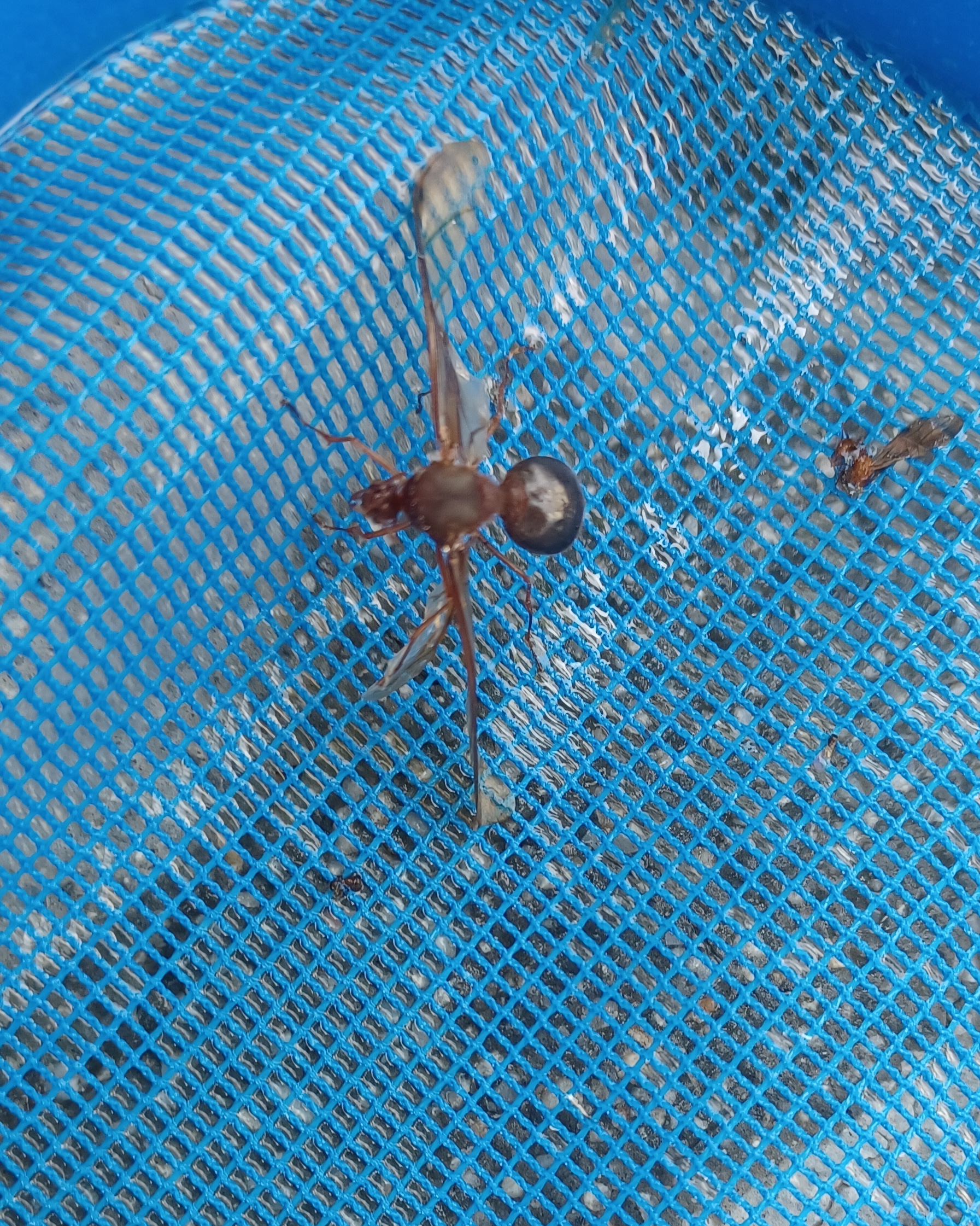
Every year, as the rainy season begins across southern Mexico, a remarkable natural event unfolds. Thousands of large, winged leaf-cutter ants emerge from underground colonies and take to the skies in synchronized mating flights. These large flying ants, often seen after the first significant rains of June, attract the attention of homeowners, gardeners, farmers, and nature enthusiasts alike.
While their sudden appearance may seem alarming, the annual emergence of large, winged leaf-cutter ants is a critical part of their life cycle and an important ecological phenomenon throughout southern Mexico.
What Are Chicatanas?
Large, winged leaf-cutter ants, known as chicatanas in Mexico, are the reproductive members of established leaf-cutter ant colonies. Unlike the worker ants commonly seen carrying pieces of leaves along forest trails, these winged individuals are future queens and males whose primary purpose is reproduction.
Leaf-cutter ants belong to the genera Atta and Acromyrmex, which are common throughout tropical and subtropical regions of Mexico. They are famous for harvesting vegetation not as food for themselves but to cultivate a specialized fungus inside their underground nests.
These large leaf-cutters ants, also known as San Juan ants and chicatanas, are large insects that come out in this rainy season to fulfill a mating and procreation cycle.
Why Do They Chicatanas Emerge in June?
The timing of leaf-cutter ant flights is closely linked to environmental conditions.
Key Triggers for Emergence
- The arrival of the rainy season
- Increased soil moisture
- Warm temperatures
- High humidity levels
- Calm evening weather conditions
June typically marks the beginning of consistent rainfall across many parts of southern Mexico, including the states of Oaxaca, Chiapas, Veracruz, Tabasco, Guerrero, and Morelos. These conditions create the ideal environment for winged ants to leave their colonies and begin their mating flights.
Leaf-Cutter Ant Nuptial Flight: Nature’s Mass Reproduction Event
Early on, in the rainy season, they come out and make what are called nuptial flights, that is, they mate so that the queen ants appear, which are the ones that are going to start new nests by laying eggs and maintaining the larvae so that the ant cycle is continued.
The emergence of winged leaf-cutter ants is known as a nuptial flight.
During this flight event:
- Colonies release thousands of winged males and virgin queens.
- Ants take flight, often shortly after rainfall.
- Mating occurs in the air.
- Males die shortly after reproduction.
- Fertilized queens land, shed their wings, and search for suitable nesting sites.

Photo credit: X Jorge Zarza/@jzarzap
A successful queen carries a small piece of the colony’s cultivated fungus within her body. This fungal culture becomes the foundation of a new colony.
Why Are There So Many Flying Ants at Once? Mass emergence provides several evolutionary advantages:
Increased Mating Success Large numbers improve the chances of queens finding unrelated mates.
Predator Saturation Birds, reptiles, spiders, and other predators consume enormous numbers of ants during flights. By emerging simultaneously, enough queens survive to establish new colonies.
Colony Expansion The synchronized flight allows leaf-cutter ant populations to spread efficiently across suitable habitats.
Ecological Importance of Leaf-Cutter Ants
Scientists explain that they are ants that adapt like everything to environmental conditions.
Chicanas appear after the first rains due to their reproductive cycle. Rainfall softens the soil, allowing winged queens to leave for their flight,
These large leaf-cutter ants have a very important function for the environment because they help maintain soil structure, help plants and have an important ecological impact, so they should not be killed.
Chicatanas play a vital role in ecosystems.
Soil Aeration Their extensive underground tunnels improve soil structure and water infiltration. Their nests oxygenate the soil and fix nutrients.
Nutrient Recycling Leaf-cutter ants help break down plant material and return nutrients to the soil.
Habitat Engineering Their nests create microhabitats that support various organisms.
Forest Dynamics By selectively harvesting vegetation, leaf-cutter ants influence plant growth patterns and biodiversity.
In this sense, these ants help maintain the structure on the earth. In addition, their cycle evolves around a series of ecological activities that are beneficial for the environment. Essentially, their life function is beneficial; they serve as food for animals, they feed on others, and they help improve the soil structure for plants and have a high ecological impact.
Best Places to Observe Chicatanas
Nature enthusiasts can often witness spectacular flights of chicatanas in:
- Tropical forests
- Agricultural landscapes
- Rural communities
- Forest edges
- Areas receiving the first heavy seasonal rains
The highest activity generally occurs during warm, humid evenings following rainfall.
Traditional Uses and Cultural Significance of Chicatanas
In some regions of Mexico and Central America, winged ants are collected seasonally as a traditional food source.
Also, their emergence has long been associated with the arrival of seasonal rains and agricultural cycles.
These annual flights remain an important natural marker for many rural communities.
Conclusion
The June emergence of winged leaf-cutter ants is one of southern Mexico’s most fascinating seasonal wildlife events. Triggered by the onset of the rainy season, these synchronized mating flights ensure the survival and expansion of one of nature’s most sophisticated insect societies.
Rather than viewing these flying ants as a nuisance, they can be appreciated as an essential part of the region’s ecological processes. Their annual appearance offers a unique glimpse into the complex life cycle of leaf-cutter ants and the intricate relationships that sustain Mexico’s diverse ecosystems.
Author: AllMexico.store
References
UAEM University
FAQs
Why do winged leaf-cutter ants appear after rain?
Rain increases soil moisture and humidity, creating ideal conditions for mating flights and the establishment of new colonies.
How long do leaf-cutter ant flights last?
Most flights last from a few hours to a single evening, although emergence events may occur over several days.
Do all leaf-cutter ants have wings?
No. Only reproductive males and virgin queens develop wings. Worker ants remain wingless.
Are winged leaf-cutter ants harmful to humans?
They are generally harmless and rarely interact aggressively with people.
What month do flying leaf-cutter ants emerge in southern Mexico?
June is typically the peak month, especially after the first significant rains of the season.