Guelaguetza in July: Experience Oaxaca’s Most Colorful Cultural Festival
Every July, the vibrant state of Oaxaca comes alive with music, dance, food, and centuries-old traditions during the world-famous Guelaguetza. Known as the “Monday on the Hill” celebration, Guelaguetza is Mexico’s largest indigenous cultural festival and one of the country’s most spectacular summer events.
If you’re planning a trip to Mexico in July, attending the Guelaguetza Festival should be at the top of your travel bucket list.
What Is Guelaguetza?
The Guelaguetza is a celebration that takes place in July in the city of Oaxaca de Juarez, Oaxaca, Mexico.
The word “Guelaguetza” comes from the Zapotec language and means “reciprocal exchange” or “offering.” The festival celebrates the spirit of community and sharing among Oaxaca’s diverse indigenous cultures.
Read more: Guelaguetza : Celebrate Oaxaca’s Rich Traditions This JulyDating back hundreds of years, Guelaguetza combines pre-Hispanic traditions with modern celebrations. Communities from all eight regions of Oaxaca gather to showcase their unique customs through traditional dances, colorful costumes, music performances, and local cuisine.
Origin of Guelaguetza
Since pre-Hispanic times, the important celebration of Guelaguetza has taken place in Oaxaca. On Ocelotl Day (which corresponds to July 16th of our contemporary calendar), three Zapotec deities were venerated: Coquixee, the deity of virtues; Pitao Cocijo, the rain god; and Xiloman (Centeotl), the goddess of soil fertility and corn.

Centeotl, the goddess of soil fertility and corn.
Various groups that formed the pre-Hispanic kingdom participated in the Guelaguetza. For eight days, musical and dance performances took place on the main plaza.
In the Zapotec language, guendalizaa means “to cooperate”. In ancient times, Guelaguetza represented not only cooperation, but also denoted the city of Oaxaca, a time when there was an attitude of sharing nature and life, customs, and traditions.
To commence the festivities, a maiden gave the first offering. Others then followed, giving the attendees the first of their crops, fruits, flowers, wild animals, and birds. At the end of the eighth day the dance of the warriors of Zaachila took place.
After the Europeans arrived, for purposes of conversion, a festivity closest in date on the liturgical calendar was chosen. The festivity of Our Lady of Carmel was selected, and Centeótl was replaced in veneration. Cultural and religious intermixing evolved into festivities of great diversity, and Oaxacans of many regions came together to celebrate.
When Is Guelaguetza Held?
Guelaguetza takes place annually during July, with the main events traditionally occurring on the two Mondays following July 16. These special days are known as “Los Lunes del Cerro” (Mondays on the Hill).
Locally, the Guelaguetza is known by the name of “Lunes del Cerro” (Mondays of the Hill). The Guelaguetza is celebrated every year on the two Mondays after July 16th.
Visitors can enjoy cultural activities throughout the month, including; traditional dance performances, artisan markets, Indigenous music concerts, parades and cultural exhibitions, regional food festivals, mezcal tastings, and folk art displays.
Guelaguetza Today

Currently, Guelaguetza festivities take place in Oaxaca, on the hill Tani-Iao-noyalaoní (Fortín). Year after year, representative delegations of the 8 regions that make up the state of Oaxaca come together from remote places: Cañada, Isthmus, Costa, Papaloapan Basin, Mixteca, Sierra Norte, Sierra Sur, and the central valleys. They attend the Guelaguetza to demonstrate their friendship to their fellow citizens and visitors. They give their offerings and receive the satisfaction of being there, of living, pouring affection towards visitors and tourists. Their participation is an expression of their history and traditions.
Following tradition, a young woman is chosen to start the celebration. In her role she gives the first offering to the authorities. Then follow the beautiful dancers of Guelaguetza festival.

Women from Coyotepec, in finely embroidered blouses and silk rebozos knotted on their heads, enter slowly, with fine steps they slide in accompanied by their sons.
Next, yalaltecos, their women dressed in white huipil adorned with colored threads. They wear the “tlacoyal”, a beautiful wool headdress and solid silver necklace with a cross.
The women of Betaza flutter their skirts like dove wings.
Mixteca women wear a large circular skirt, blouse and rebozo, ribbons and flowers in their braids.

The men wear a white suit, belt, and serape.
Why Visit Guelaguetza?
The Guelaguetza festival an excellent opportunity to discover Oaxacan, cuisine, and culture.
Authentic Oaxacan Cuisine
Food lovers will discover why Oaxaca is considered one of Mexico’s culinary capitals. Festival visitors can enjoy; mole negro, tlayudas, tamales, chapulines, chocolate beverages, artisanal mezcal.
Handmade Oaxacan Crafts
The Guelaguetza festival is also an excellent opportunity to shop for authentic handmade Mexican products. Visitors can find:
Visitors can find; handwoven textiles, alebrijes, traditional black pottery, embroidered clothing, traditional jewelry, and handmade home décor.
These artisan products make meaningful souvenirs while supporting local communities and preserving traditional craftsmanship.
Spectacular Guelaguetza Traditional Dances
The Guelaguetza traditional dancers are the heart of the cultural festival, showcasing the rich heritage, colorful regional costumes, and vibrant folk dances of the state’s diverse Indigenous communities. Each performance represents a different region of Oaxaca, featuring authentic music, storytelling, and centuries-old traditions passed down through generations. Watching Guelaguetza dancers is one of the best ways to experience the spirit of Oaxacan culture and the enduring traditions that make the Guelaguetza Festival a must-see event in Mexico.
The triques perform a traditional ritual dance.
The tascuates of the sierra dress in camisoles of long fabrics and girdles.
The mazatecas display embroidered huipiles and ribbons of turquoise, pink, and blue colors. At the end of their dance, they spread their offering of perfumed flowers through the air.
The costeños exit while dancing the “chilenas” with zapateados and turns.


Photo credit: Exelsior
The proud Tehuanas dance La Zandunga, wearing a huipil and skirt embroidered with large flowers, adorned with colorful jewelry and coin necklaces.

Young women of Tuxtepec, dressed in brightly colored huipiles, with a pineapple on their shoulders, throw their fruits to the crowd, at the end.

The Oaxacan chinas dance carrying large baskets with dried flowers on their heads.
Groups from Etla, Tlacolula, and Ejutla participate.

The warrior dance of The Feather is at closing.

Community support
The Guelaguetza is also known as communal support (chili, corn, beans, etc.), support that takes place in the communities when festivities are held. This support is reciprocal, such that when someone is given support, in turn, they are obliged to provide support. Guelaguetza denotes the act of participating by cooperating, with no obligation other than that of reciprocity. Cooperation and solidarity.
Final Thoughts
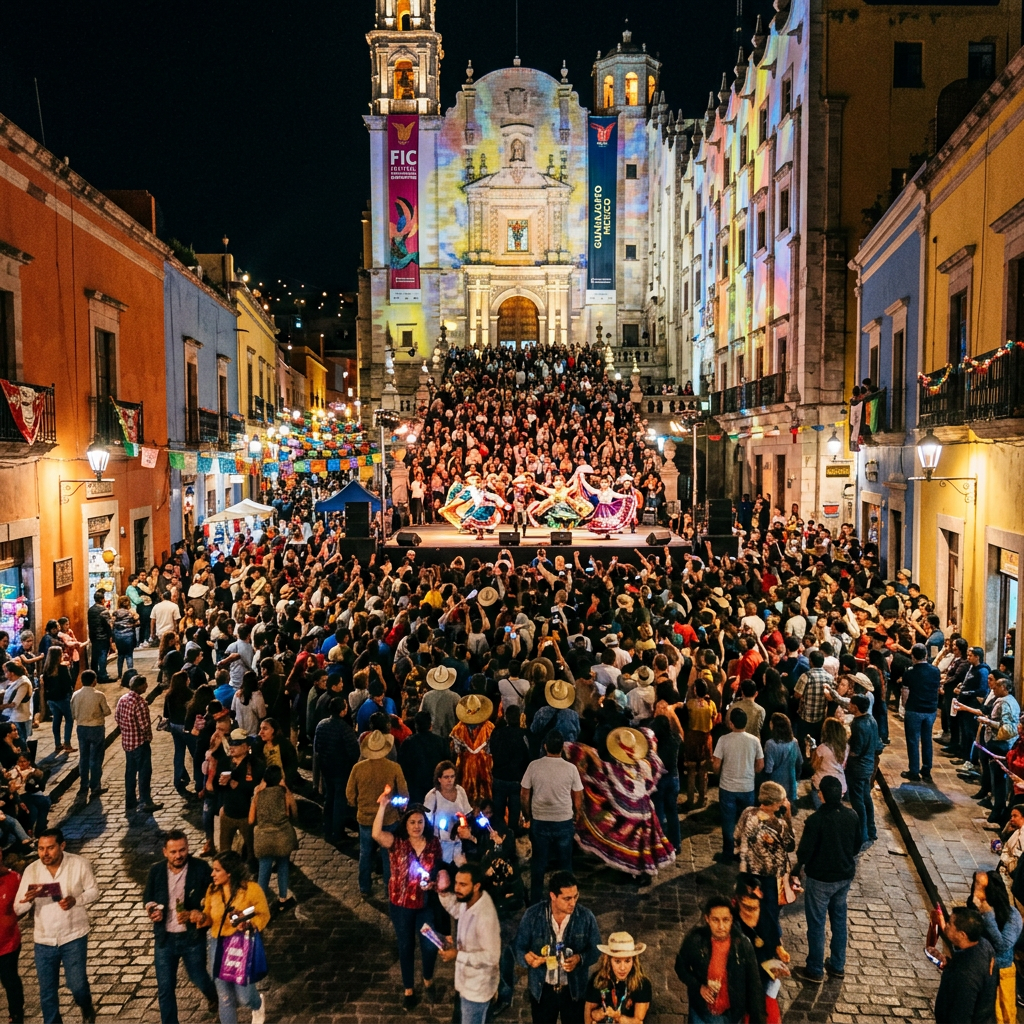
The Guelaguetza brings together thousands of people every year.
Experience the Guelaguetza Festival in Oaxaca this July. Discover traditional dances, indigenous culture, authentic Mexican food, artisan crafts, and travel tips for Mexico’s most colorful cultural celebration.
Author: AllMexico.store
References:
The Mexican Government Guelaguetza Oaxaca 2026 | Corazón cultural de México