Introduction
The Central Campus of the University City of the National Autonomous University of Mexico (UNAM) is one of the most iconic cultural and academic landmarks in Latin America. Recognized as a UNESCO World Heritage Site in Mexico, this extraordinary campus blends modernist architecture, Mexican artistic heritage, and functional urban planning. Located in Mexico City, it attracts students, tourists, architects, and art lovers from around the world.
A Brief History of UNAM’s Central Campus
Construction of the Central Campus began in the late 1940s and was completed in 1952. The project brought together over 60 architects, engineers, and artists who collaborated to create a space that reflects Mexico’s post-revolutionary identity. The campus was designed to integrate architecture with visual arts, resulting in a unique environment that celebrates both education and culture.
In 2007, UNESCO designated the campus as a World Heritage Site, recognizing its outstanding universal value as a masterpiece of 20th-century architecture and urbanism.
Architectural Significance
The Central Campus is a prime example of Mexican modernism. What makes it truly unique is the integration of buildings with the natural volcanic landscape of the Pedregal area. Instead of altering the terrain, architects incorporated lava rock into plazas, walkways, and building foundations.
Key architectural highlights include:
- Rectoría Building: Known for its bold murals and administrative importance
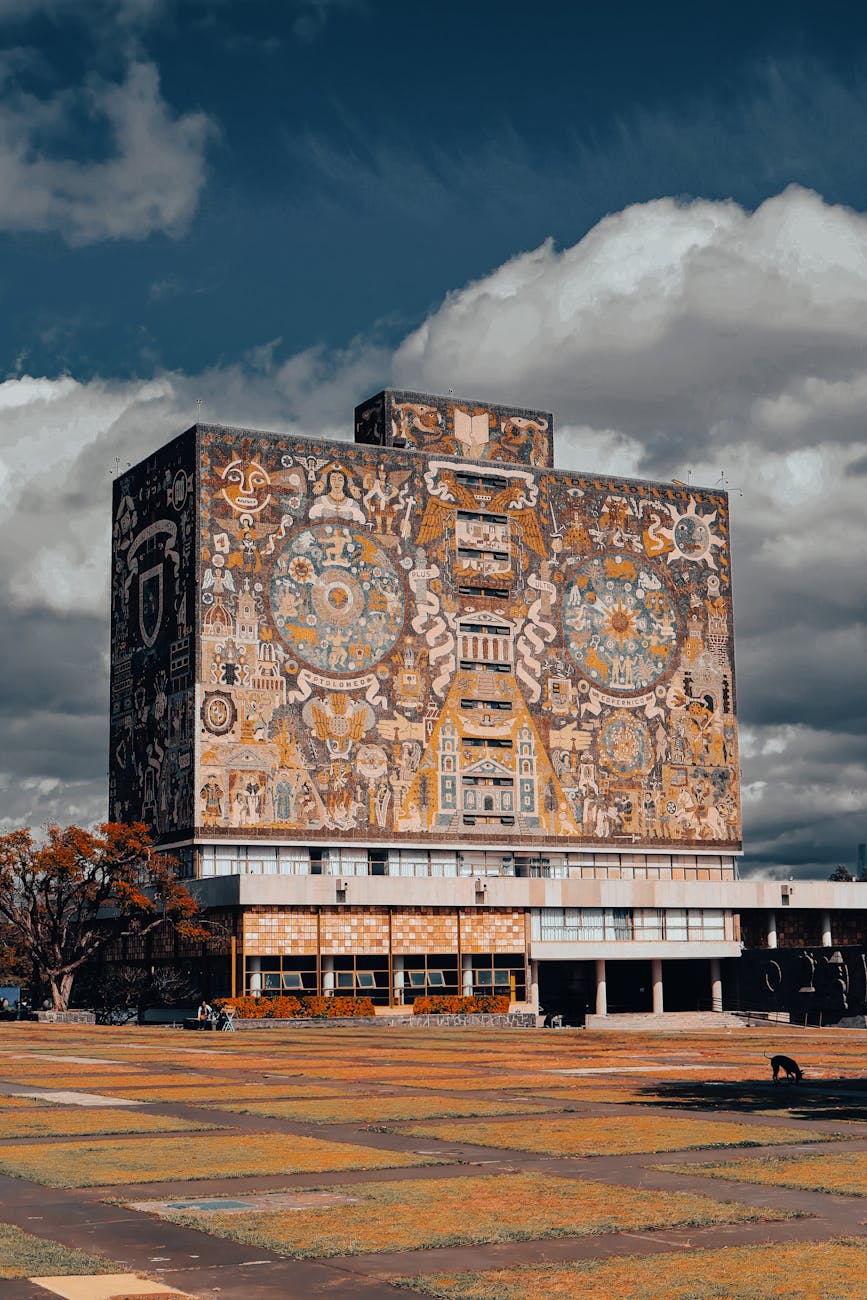
- Central Library: Covered in intricate mosaic murals depicting Mexican history
- Olympic Stadium: Built using volcanic stone, blending seamlessly with the environment
The campus layout emphasizes open spaces, pedestrian pathways, and a harmonious balance between nature and built structures.
Iconic Murals and Artwork
One of the defining features of the Central Campus is its monumental murals created by some of Mexico’s most celebrated artists. These artworks transform buildings into storytelling canvases.
Notable works include:
- The Central Library mural, illustrating Mexico’s past, present, and future
- Murals at the Rectoría building, representing social and cultural themes
- Stadium murals showcasing pre-Hispanic influences
These pieces embody the Mexican muralist movement, making the campus not just an educational space but also an open-air museum.
Cultural and Academic Importance
UNAM is the largest university in Latin America and one of the most prestigious Spanish-speaking institutions in the world. The Central Campus serves as its heart, hosting faculties, research institutes, libraries, and cultural venues.

Beyond academics, the campus is a vibrant cultural hub featuring:
- Museums and galleries
- Theaters and performance spaces
- Public lectures and events
It plays a vital role in shaping Mexico’s intellectual and cultural life.

Visiting the Central Campus
The Central Campus is open to visitors and offers a rich experience for anyone interested in architecture, history, or art. Highlights for visitors include:
- Walking through the expansive green spaces
- Exploring the Central Library and its murals
- Attending cultural events or exhibitions
- Visiting the Olympic Stadium
Guided tours are also available for those who want a deeper understanding of the campus’s significance.

Why It Matters
The UNESCO-listed Central Campus of UNAM is more than just a university—it is a symbol of Mexico’s cultural identity, creativity, and commitment to education. Its innovative design and artistic integration continue to inspire architects and scholars worldwide.
Conclusion
Whether you’re an architecture enthusiast, a history buff, or a curious traveler, the Central Campus of UNAM is a must-see destination in Mexico City. Its UNESCO recognition highlights its global importance, while its beauty and cultural depth make it unforgettable.
Author: AllMexicoStore