Discover the National Museum of Anthropology in Mexico City
The National Museum of Anthropology in Mexico City is one of the most important museums in the Americas and a top attraction for visitors exploring Mexico’s rich cultural heritage. Located in Chapultepec Park, this world-renowned museum houses the largest collection of pre-Hispanic artifacts in Mexico.

So, if you are interested in learning about ancient civilizations, or simply planning a trip to Mexico City, the National Museum of Anthropology offers an unforgettable journey through thousands of years of Mexican history. It is a must-see for history enthusiasts, travelers, students, and families.
History of the National Museum of Anthropology (Mexico)
The National Museum of Anthropology (Museo Nacional de Antropología) opened its doors in 1964. The museum was designed by renowned Mexican architect Pedro Ramírez Vázquez. It was created to preserve and showcase Mexico’s indigenous cultures and archaeological treasures.
Today, it attracts millions of visitors annually and is widely considered one of the finest anthropology museums in the world.
What to see at the National Museum of Anthropology
The Aztec Sun Stone
One of the museum’s most famous exhibits is the Aztec Sun Stone, often mistakenly referred to as the Aztec Calendar. This massive basalt sculpture is an iconic symbol of Mexico’s ancient civilization and one of the most photographed artifacts in the museum.
The Tomb of Pakal
Visitors can admire a replica of the tomb of King Pakal, one of the most important rulers of the ancient Maya civilization. The intricate carvings and detailed reconstruction provide insight into Maya beliefs and royal traditions.
Olmec Colossal Heads
The museum features impressive Olmec colossal stone heads, showcasing the artistic achievements of one of Mesoamerica’s earliest civilizations.

Maya, Zapotec, and Mixtec Galleries
Explore extensive collections dedicated to the Maya, Zapotec, Mixtec, Toltec, and other indigenous cultures that shaped Mexico’s history. Each gallery contains artifacts, sculptures, ceremonial objects, and educational displays that bring ancient civilizations to life.
Architecture and Design
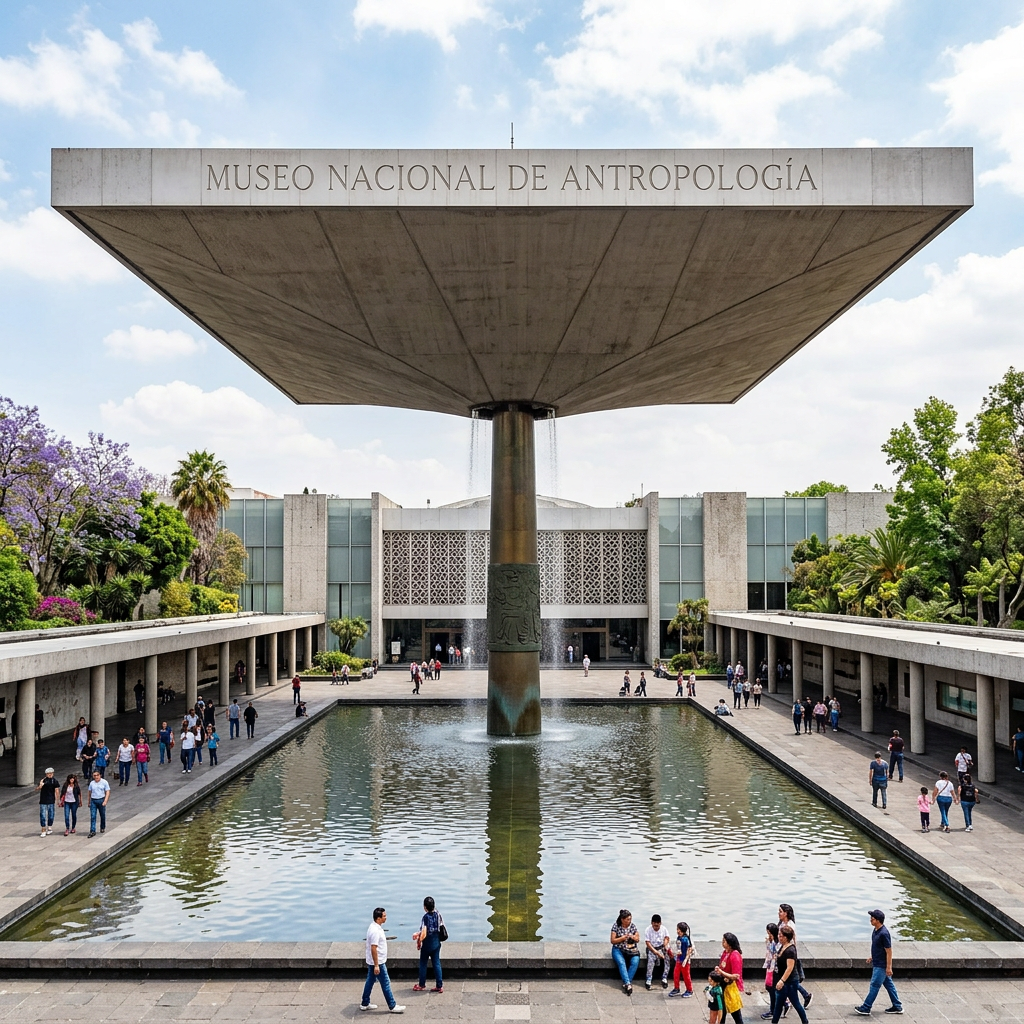
The museum itself is an architectural masterpiece. Its most recognizable feature is the massive central courtyard with the famous “umbrella fountain,” a giant concrete structure supported by a single pillar that creates a dramatic waterfall effect.

The building’s design reflects Mexico’s blend of modern innovation and deep respect for its indigenous roots.
Why visit the National Museum of Anthropology?
Learn About Ancient Mexico
The museum provides unparalleled insight into Mexico’s pre-Columbian civilizations, helping visitors understand the origins of many traditions that continue today.
Family-Friendly Experience
Interactive exhibits, spacious galleries, and educational displays make the museum suitable for visitors of all ages.
Perfect for Cultural Tourism
For travelers seeking authentic cultural experiences in Mexico City, the National Museum of Anthropology ranks among the city’s top attractions alongside Chapultepec Castle, the Historic Center, and the Palacio de Bellas Artes.
Tips for Visiting
- Arrive early to avoid crowds.
- Allow at least 3–5 hours for your visit.
- Wear comfortable walking shoes.
- Bring a camera for memorable photos.
- Consider hiring a guide to gain deeper historical insights.
Final Thoughts
The National Museum of Anthropology in Mexico City is more than a museum—it is a gateway to Mexico’s fascinating past. From the legendary Aztec Sun Stone to the remarkable treasures of the Maya and Olmec civilizations, every exhibit tells a story that has shaped modern Mexico.

If you’re visiting Mexico City, adding the National Museum of Anthropology to your itinerary is one of the best ways to experience the country’s extraordinary cultural heritage firsthand.
Author: AllMexico.store
References
National Museum of Anthropology
Did you know?
After visiting the museum, you can explore nearby attractions in Mexico City.
These destinations complement your museum visit and provide a deeper appreciation of Mexico’s history, art, and culture.
- Chapultepec Castle
- Zócalo
- Bosque de Chapultepec
- Palacio de Bellas Artes