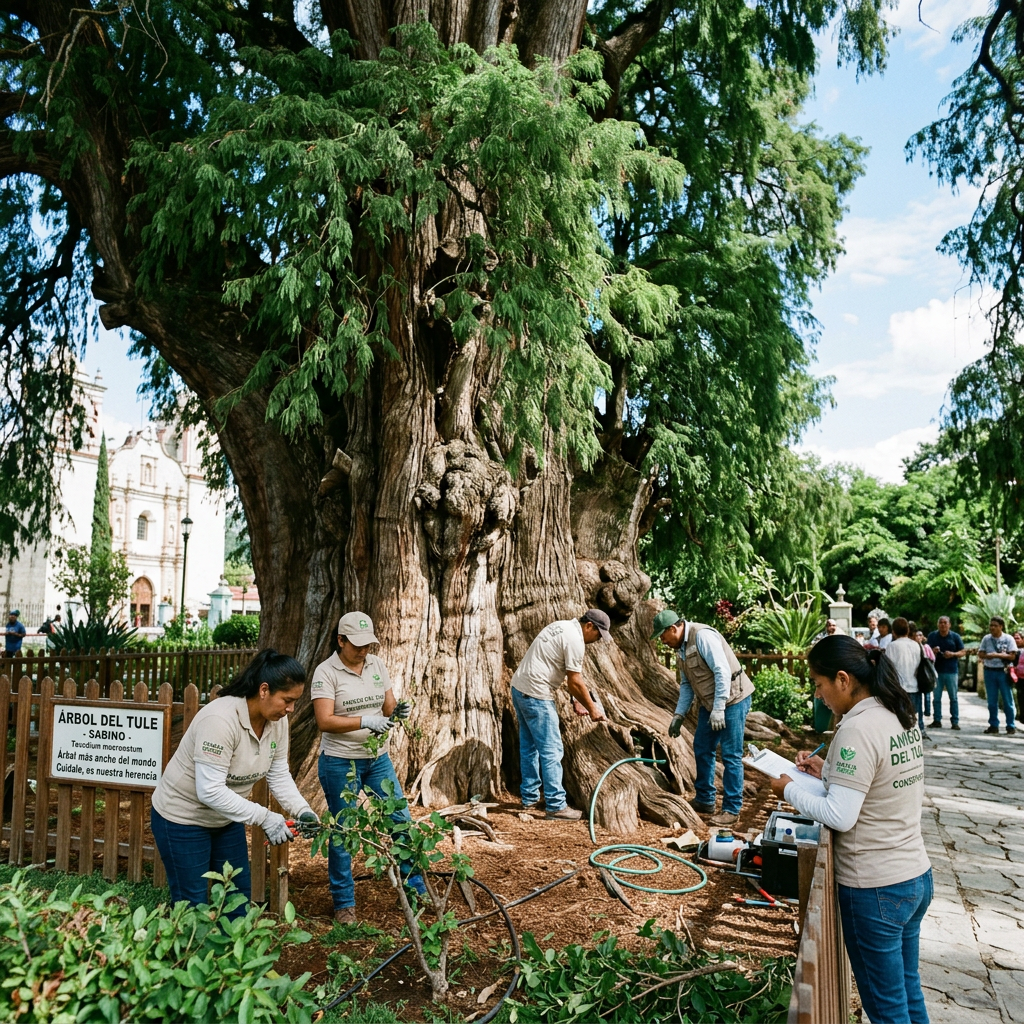
Every October, the community of Santa María del Tule in Oaxaca celebrates one of Mexico’s most remarkable natural treasures: the Árbol del Tule. This enormous ahuehuete tree, located just outside Oaxaca City, has stood for more than 2,000 years and has become one of the most recognizable symbols of Oaxaca’s history, culture, and connection with nature.
The October celebration of the Árbol del Tule is more than a festival. It is an opportunity to honor a living monument, celebrate local traditions, and remember the importance of protecting one of Oaxaca’s most extraordinary trees.
What Is the Árbol del Tule?
The Árbol del Tule is a giant ahuehuete, also known as a Mexican cypress or sabino. Its scientific name is Taxodium mucronatum. It stands in the atrium of the Church of Santa María de la Asunción in the town of Santa María del Tule, in Oaxaca’s Central Valleys.
According to the Government of Oaxaca, the tree is approximately 41 meters (135 feet) tall, has a canopy measuring about 32 meters (105 feet) across, and has a trunk diameter of approximately 14 meters (46 feet). Its estimated age is more than 2,000 years. OOaxaca+1
Its enormous trunk is particularly famous for its unusual shapes. From different angles, visitors have traditionally imagined figures and animals formed by the tree’s bark and roots, making a visit to the Árbol del Tule an experience that combines nature, history, and local storytelling.
Why Is the Árbol del Tule Celebrated in October?
October is an especially important month for the Árbol del Tule. The state of Oaxaca officially commemorates the Día del Árbol del Tule on the second Monday of October, celebrating the tree’s extraordinary longevity and its importance to the identity of Oaxaca. OOaxaca
The celebration has deeper historical roots as well. Research published by Mexico’s National Institute of Anthropology and History (INAH) describes how the tradition developed around the tree as the Fiesta del Árbol del Tule, incorporating local ritual traditions, religious practices, community identity, and tourism.
In other words, October is not simply a time to admire a giant tree. It is a season when the community highlights the cultural meaning of the Árbol del Tule and its relationship with the people of Santa María del Tule.
What Happens During the October Celebration?
The exact activities can vary from year to year, but past celebrations have included traditional music, calendas, cultural performances, religious ceremonies, food, and community gatherings.
A previous official Oaxaca tourism program, for example, included an empanada fair, a calenda, musical performances, traditional bands, a morning greeting to the tree, a religious ceremony, and community festivities. One particularly memorable tradition described by the state was the singing of “Las Mañanitas” to the Árbol del Tule followed by a ritual greeting.
These activities demonstrate how the celebration brings together several important elements of Oaxacan culture: music, food, religion, community traditions, and respect for nature.
Visitors should check the current year’s official schedule before traveling because individual activities and dates can change.
The Árbol del Tule and Oaxaca’s Cultural Heritage
The Árbol del Tule is deeply connected to the identity of Santa María del Tule. Even the name of the community reflects its natural surroundings.
The Government of Oaxaca explains that the town was historically located in a wetland environment where aquatic plants grew, including the plant commonly known as tule or cattail. The tree itself is an ahuehuete, but the community took its name from the surrounding tule vegetation.
Over centuries, the tree became much more than a botanical landmark. It became a symbol of the community and a place where cultural traditions could be expressed and passed from one generation to the next.
Historical research also documents the long-standing efforts of local residents to protect the tree. The Árbol del Tule has therefore become an example of how a natural landmark can also represent community memory, cultural identity, and local heritage.
Tule Tree More Than 2,000 Years Old
One of the most fascinating facts about the Árbol del Tule is its age.
The Tule tree is estimated to be more than 2,000 years old, meaning it was already alive long before the arrival of the Spanish in Mexico. It has survived enormous changes in the landscape, society, and culture of Oaxaca.
Its size is equally impressive. With a trunk approximately 14 meters in diameter, it is officially recognized by the Government of Oaxaca as a notable tree and is described as having the world’s largest trunk diameter.
Standing beside it gives visitors a remarkable sense of time. The Árbol del Tule is not simply something from Oaxaca’s history—it is a living organism that has witnessed generations of history.
Visiting the Árbol del Tule in October
October can be an especially interesting time to visit Santa María del Tule because travelers may have the opportunity to experience both the tree and the community’s cultural celebrations.
The Árbol del Tule is located in the atrium of the Church of Santa María de la Asunción, in Santa María del Tule, along the route east of Oaxaca City.
When visiting, travelers should remember that the tree is a living heritage site. Respecting designated areas, following local instructions, avoiding damage to the bark or roots, and supporting local businesses and community activities are simple ways to help preserve the site.
Also, the importance of conservation has become increasingly clear in recent years. In 2024, the Government of Oaxaca announced conservation initiatives for the tree, including measures focused on its health and protection. In 2025, a technical committee continued work involving structural evaluation, tree tomography, and soil analysis.
Why the Árbol del Tule Is Worth Visiting
For travelers exploring Oaxaca, the Árbol del Tule offers something different from the state’s archaeological sites, markets, and colonial architecture. Here, the attraction is a living piece of history.
A visit in October can combine:
- A chance to see one of Mexico’s most famous trees.
- An introduction to the history of Santa María del Tule.
- Traditional Oaxacan music and community celebrations.
- Local food and cultural activities.
For photographers, the tree’s enormous trunk and distinctive shapes make it particularly memorable. For families, it provides an accessible way to introduce children to Oaxaca’s natural and cultural history.
The Meaning of the Árbol del Tule Today
The Árbol del Tule continues to represent much more than its extraordinary size.
It is a symbol of endurance, community, and connection with the land. Its survival for thousands of years has made it an important part of Oaxaca’s cultural identity, while its current conservation efforts remind visitors that even ancient natural treasures require care.
The October celebration brings this message into focus. By celebrating the Árbol del Tule, the community celebrates not only an ancient tree but also the traditions, stories, and people that have helped preserve it.

The Día del Árbol del Tule, observed on the second Monday of October, provides a particularly meaningful time to learn about the tree and its importance.
Final Thoughts
The Árbol del Tule in Oaxaca is one of those rare places where nature and culture come together. More than 2,000 years old, this magnificent ahuehuete has become a symbol of Santa María del Tule and an enduring part of Oaxaca’s identity.
Every October, the celebration provides an opportunity to appreciate this remarkable living monument while experiencing the traditions of the local community. Whether you are interested in Mexican history, Oaxacan culture, ecotourism, photography, or simply extraordinary places to visit, the Árbol del Tule deserves a place on your Oaxaca itinerary.
Author: AllMexico.store
References
INAH Bienvenidos al INAH
Santa Maria del Tule Santa María del Tule – Wikipedia
Frequently Asked Questions About the Árbol del Tule
When is the Árbol del Tule celebrated?
The official Día del Árbol del Tule is commemorated on the second Monday of October in Oaxaca. Broader festivities and cultural activities may take place around this period. OOaxaca
How old is the Árbol del Tule?
The Árbol del Tule is estimated to be more than 2,000 years old. OOaxaca
Where is the Árbol del Tule?
It is located in Santa María del Tule, Oaxaca, in the atrium of the Church of Santa María de la Asunción, east of Oaxaca City.
What type of tree is the Árbol del Tule?
It is an ahuehuete, scientifically known as Taxodium mucronatum. It is also commonly called a sabino or Mexican cypress.
Why is the Árbol del Tule famous?
The tree is famous for its extraordinary age, enormous trunk, distinctive shapes, and cultural importance to Santa María del Tule and Oaxaca. The Government of Oaxaca lists its trunk diameter at approximately 14 meters. OOaxaca
Is October a good time to visit the Árbol del Tule?
Yes. October is particularly interesting because of the annual celebration of the Árbol del Tule and the cultural activities associated with it. Travelers should verify the current year’s event schedule before visiting.


Leave a Reply