Introduction
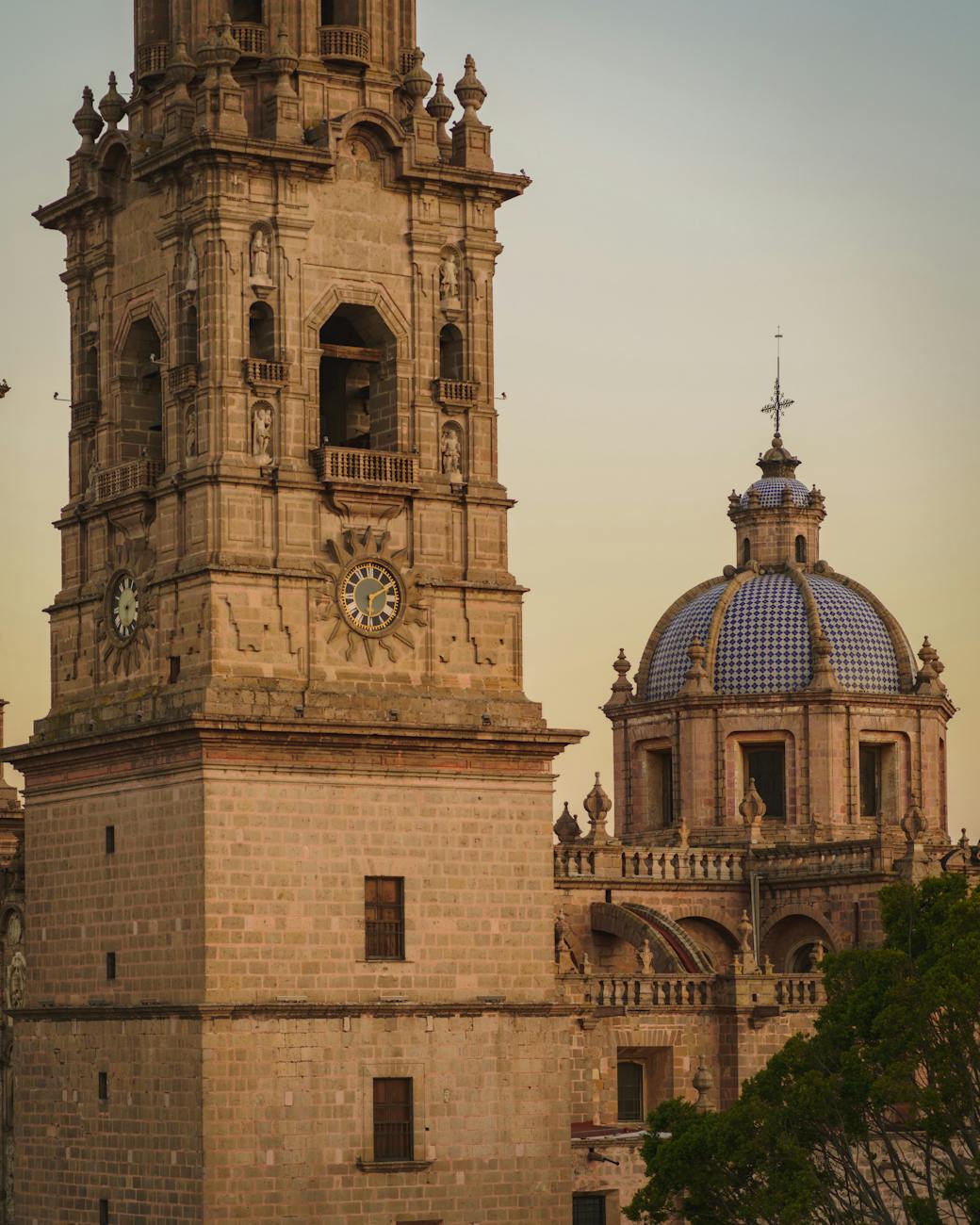
The Historic Center of Morelia, located in the capital city of the state of Michoacán, Mexico, is renowned for its stunning colonial architecture, vibrant cultural scene, and rich history. In 1991, it was designated as a UNESCO World Heritage Site. The Historic Center of Morelia stands as a testament to the fusion of European influences with traditional Mesoamerican urban planning. Morelia’s historic district is not only a living museum of the past but also a thriving hub of contemporary Mexican life.
Historical Background
Founded in 1541 as “Valladolid,” the city of Morelia was an important city during the Mexican colonial era due to its strategic location on the trade route between Mexico City and the Pacific coast. Later, the city was renamed in honor of José María Morelos, a hero of the Mexican War of Independence. Over the centuries, Morelia became a center for religious, educational, and political activity, leaving a legacy reflected in its grand buildings and monuments.
Architectural Highlights
The Historic Center of Morelia is famous for its more than 200 historic buildings. Most are constructed from characteristic pink quarry stone, giving the city a distinctive and elegant appearance. The layout of the center, with its grid of wide streets and plazas, reflects European Renaissance ideals of urban planning.
- Morelia Cathedral: The cathedral is a masterpiece of Baroque architecture. Its twin towers and ornate façade overlook the main square. Construction began in 1660 and took nearly a century to complete.

- Palace of Government: This grand building houses murals depicting the history of the state of Michoacán and the struggle for Mexican independence.
- Temple of San Francisco: The temple is one of the oldest churches in the city. It showcases a blend of Plateresque and Baroque styles.
- Aqueduct: This stone aqueduct stretches over a mile and features 253 arches. It was built in the 18th century.

Cultural Significance
The Historic Center of Morelia is a vibrant venure for festivals, music, and local Mexican gastronomy. Morelia hosts the International Film Festival and the Music Festival, attracting artists and visitors from around the world. The area is also known for its traditional cuisine, including “uchepos” (corn tamales) and “atole” (a warm corn-based beverage).
Conservation and World Heritage Status
The UNESCO designation recognizes Morelia’s outstanding preservation of its colonial-era structures and urban planning. Local and national authorities continue to implement conservation projects to protect the city’s architectural and cultural legacy while accommodating modern urban life.
Read about more UNESCO World Heritage Sites in Mexico.
Author: AllMexico.com
References
Government of Morelia Morelia – H. Ayuntamiento de Morelia