Every year, taco lovers across Mexico come together to celebrate one of the country’s most iconic foods: the taco. Known as Día del Taco (Day of the Taco), this flavorful celebration takes place on March 31 and honors the rich culinary heritage, regional diversity, and cultural significance of tacos in Mexican life.
What Is Day of the Taco?
Day of the Taco is an unofficial food holiday that began in 2007 as part of a marketing campaign—but it quickly became a beloved national celebration. Restaurants, street vendors, and food festivals across Mexico offer special promotions, discounts, and unique taco creations to mark the occasion.
Day of the Taco is more than a celebration of food—it’s a tribute to Mexico’s culinary soul. Whether you’re enjoying tacos on a busy street or making them at home, March 31 is the perfect excuse to indulge in one of the world’s most beloved dishes.
Today, it’s not just about eating—it’s about celebrating identity, tradition, and community through food.
Exploring Taco History, Variations, and Festivities
Who hasn’t enjoyed a really good taco? Whether you prefer a classic beef taco, a spicy shrimp taco, or a vegetarian taco loaded with fresh vegetables, Taco Day offers something for everyone.
Taco Day is a vibrant and delicious celebration that brings together taco lovers from around the world to honor this beloved culinary creation. This annual event is observed on March 31. Taco Day is a perfect excuse to indulge in this versatile dish and explore its rich history and cultural significance.

The History of Tacos
The origins of the taco are as rich and varied as the flavors that fill its tortilla.
Evidently,there is more than one version of the history of tacos. One version is that the culinary history of the taco can be traced back to the Mesoamerican origin, to the ancient indigenous peoples of Mexico. The ancient civilizations of Mexico cultivated corn, nixtamalized it, and used it to create corn tortillas. As such, corn has been a staple of Mexican cuisine for thousands of years. Specifically, based on vestiges of the Olmecs, it is believed that the taco was born as the basis of their diet.
The basis of the diet of Mesoamericans was mainly corn, squash, beans, chilis, and meats; the corn tortillas filled with these various ingredients.
Another version by some historians is that the inhabitants of Tenochtitlan were the first to put food such as pumpkin, chili, and beans in a corn wrap layer similar to the corn tortilla consumed today. It is said that the great Aztec emperor, Moctezuma, used the corn tortilla to wrap or hold his food.
Yet, another version is that women of Tenochtitlan wrapped food in corn tortillas for their husbands who went out to work. This manner of using the corn tortilla to wrap meals was very practical and allowed for inhabitants to transport their food anywhere.
Thus, this habit of the inhabitants of eating their food wrapped in corn tortillas, then spread across other regions.
Another version is that the word “taco” came from Mexican silver miners in the 18th century. These miners used the term to describe the paper-wrapped loads they used to excavate ore. The loads were pieces of paper wrapped with gunpowder. Thus, the filling of the loads resembled tacos.
For the modern taco, these ancient practices laid the foundation, that we know and love today.
Lastly, some historians suggest that the taco gained popularity in Mexico in the 19th century. Vendors in Mexican markets offered customers a variety of fillings wrapped in tortillas.
Delicious and historic, the taco is part of Mexico’s gastronomic diversity. The popularity of the taco has skyrocketed. The variety of tacos is very wide and consumed all over the world. The taco is delicious, nutritious and 100 percent Mexican. Yet, as Mexican cuisine has gone global, the taco has continued to evolve and assimilate into other cuisines.
Why Tacos Matter in Mexican Culture
Tacos are more than just a meal in Mexico—they’re a way of life. Found everywhere from bustling street corners to high-end restaurants, tacos represent accessibility, creativity, and deep-rooted culinary traditions.
Each region of Mexico has its own signature taco styles, reflecting local ingredients and cooking techniques. From coastal seafood tacos to slow-cooked meats in central regions, every bite tells a story.
Tips for Enjoying Day of the Taco
To make the most of your taco experience:
- Go local: Visit street vendors for authentic flavors
- Try something new: Step outside your usual order
- Pair wisely: Enjoy tacos with aguas frescas or traditional drinks
- Pace yourself: You’ll want to try more than one type
So grab a tortilla, add your favorite filling, and join the celebration—because in Mexico, every day is a good day for tacos, but this one is extra special.
Types of Tacos
Popular Types of Tacos to Try
Today, the delight of Taco Day includes the opportunity to explore the many different types of tacos. Each taco brings its own unique flavor and texture. Whether the taco is al pastor, carnitas, longaniza, cochinita, barbacoa, birria, roast meat, chicken, nopales, chili, grasshoppers, fish, or avocado, among other foods, each taco brings its own unique flavor and texture.
If you’re celebrating Day of the Taco, here are some must-try varieties:
Traditional Tacos
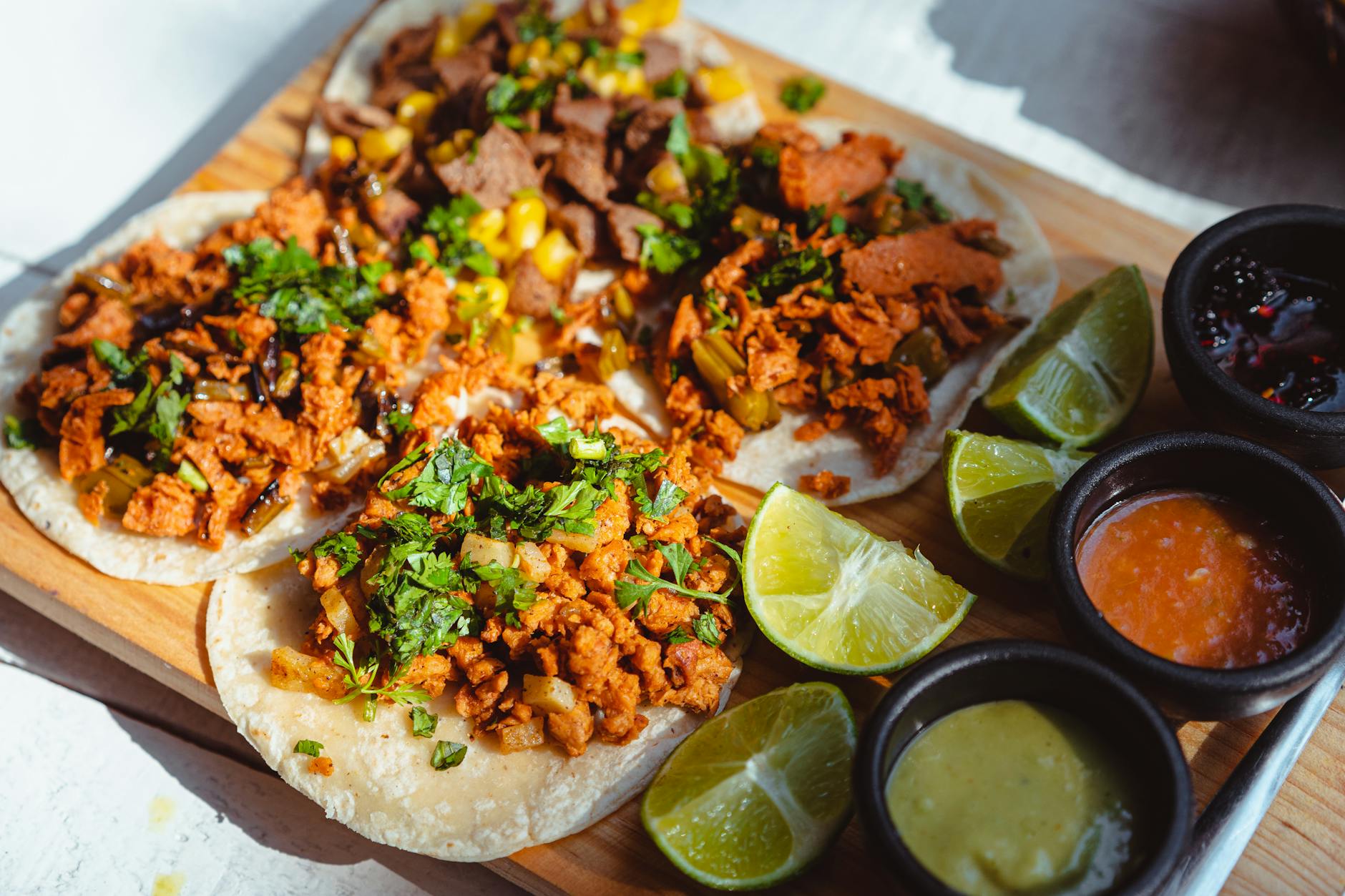
Traditional tacos are typically made with soft corn tortillas and filled with seasoned meats such as barbacoa, carnitas, al pastor, suadero, steak, stew, canasta (basket), cochinita, and seafood.
Traditional toppings include cilantro, onions, and a squeeze of lime. They are simple yet bursting with authentic Mexican flavors.
- Tacos al Pastor – Marinated pork cooked on a vertical spit, served with pineapple, onion, and cilantro.
- Tacos de Carnitas – Slow-cooked pork that’s tender on the inside and crispy on the outside.
- Tacos de Barbacoa – Traditionally cooked underground, delivering rich, smoky flavors.
- Tacos de Suadero – Thin cuts of beef cooked slowly in their own juices.
Tacos de Pescado
Originating from the coastal regions of Baja California, fish tacos are usually made with grilled or fried fish, and topped with fresh cabbage, pico de gallo, and a creamy sauce. Fresh fish tacos, often battered and fried are popular in coastal regions. The combination of fresh ingredients and seafood makes these tacos light and refreshing. Try Mexican avocado salsa.
Vegetarian Tacos
For those who prefer plant-based options, vegetarian tacos offer a delicious alternative. Common fillings include grilled vegetables, beans, nopales, squash flowers, and more. These are often enhanced with avocado and various types of salsas. Vegetarian tacos are colorful, nutritious, and full of flavor.
Breakfast Tacos
A delightful twist on traditional tacos, breakfast tacos are typically filled with scrambled eggs, bacon or sausage, beans and cheese, and potatoes. They provide a hearty and satisfying start to the day.

Best Places to Celebrate Day of the Taco in Mexico
While you can find amazing tacos almost anywhere in Mexico, some cities are especially famous for their taco culture:
- Mexico City – Known for its endless variety and legendary street food scene
- Tijuana – Famous for Baja-style fish tacos
- Monterrey – A hotspot for grilled meat tacos
- Oaxaca – Offers unique regional flavors and indigenous influences
Celebrating Taco Day
As the taco variety is very large it is now consumed all over the world.
Taco Day has grown into a global celebration, with restaurants, food trucks, and home cooks all joining in on the festivities.
Here are some ways to celebrate Taco Day:
Host a Taco Party
Gather friends and family for a festive taco party. Then, set up a taco bar with a variety of food fillings, toppings, and salsas. Encourage guests to create their own taco masterpieces and enjoy the diverse flavors.

Try New Recipes
Experiment with different taco recipes to explore new tastes and textures. From traditional Mexican tacos to fusion creations like Korean BBQ tacos, or Baja California tacos, the possibilities are endless.
Support Local Restaurants
Many restaurants offer special promotions and discounts on Taco Day. Take this opportunity to support local eateries and try their unique taco offerings.

Learn About Taco Culture
Take some time to learn about the cultural significance of tacos and their place in Mexican cuisine. Watch documentaries, read books, or follow food bloggers who share insights into taco history and traditions.

Final Thoughts
In summary, Taco Day is more than just a day to enjoy tasty food. Taco Day is a celebration of the rich history and cultural traditions behind this beloved Mexican dish.
Whether you’re a taco enthusiast or a newcomer to the world of tacos, Taco Day offers a chance to indulge in diverse flavors, try new recipes, and appreciate the culinary artistry of taco-making.
So, mark your calendar for March 31 and get ready to savor the deliciousness and uniqueness of Taco Day!
Author: AllMexico.store
References
Mexico Desconocido
Did you know?
In March 2007, Televisa, the Mexican television network, launched a campaign to find out how popular the taco was, to collect data and curious facts.
To celebrate even more, the television station organized concerts, bazaars and festivals in honor of the taco. As a result, March 31 was established as annual Taco Day in Mexico.