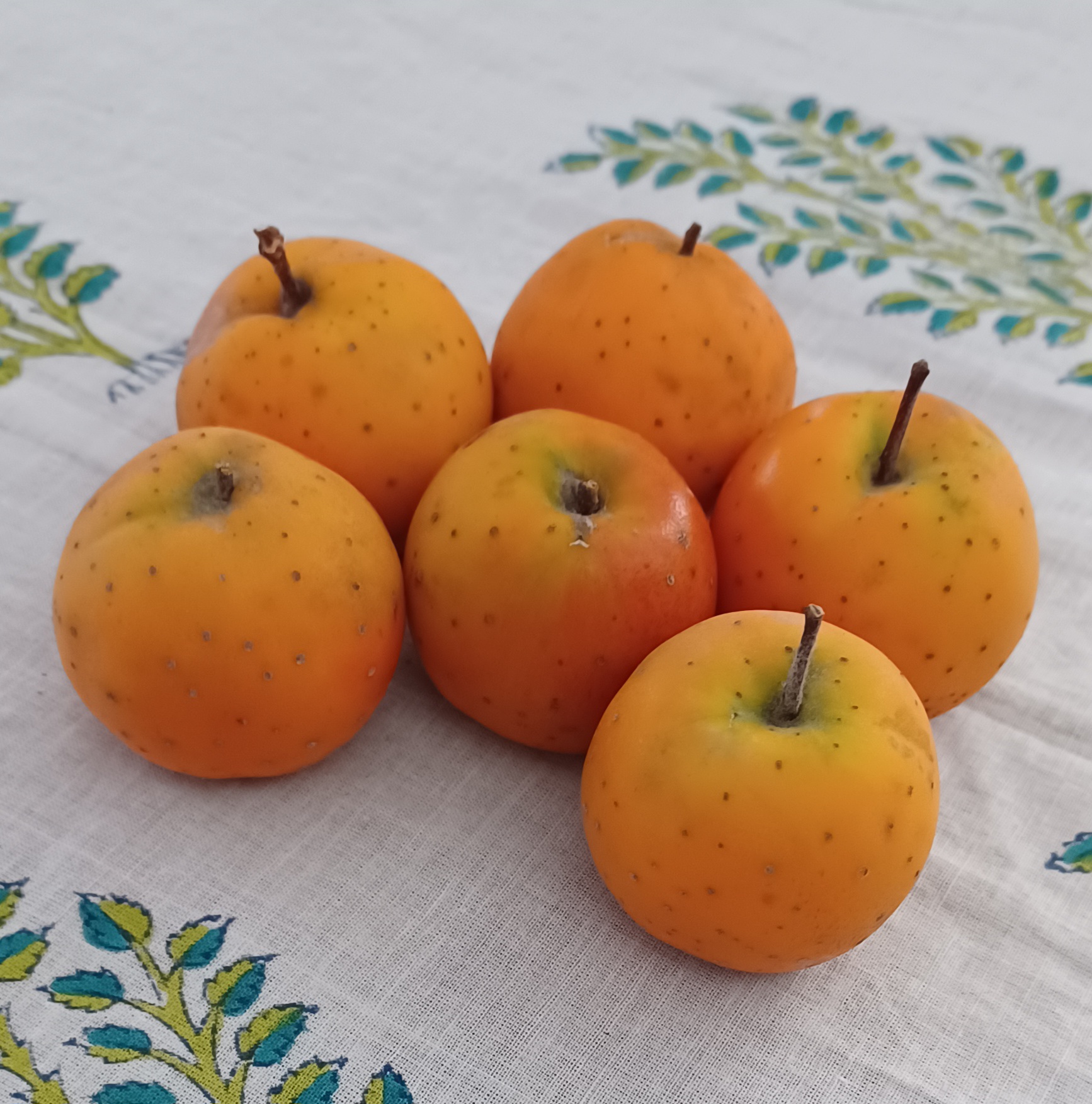
In December, seasonal fruits are cherished in Mexico as they are fundamental to Mexican traditions. During the winter season in Mexico, the tejocote is a fruit that is consumed fresh, in fruit punch, in sweets, and canned. Moreover, it enjoyed as a filler in piñatas. The tejocote fruit is unique and native to Mexico.
This article will provide an overview of the tejocote, including its origin, description, special features, and production.
The word tejocote derives from the Nahuatl “texócotl“, tetl (hard) and xocotl (sour fruit) which means “hard wild fruit with a sour taste“,
Origin of Tejocote fruit
Tejocote fruits are native to Mexico and Central America.
The tejocote fruit belongs to the Rosaceae family, specifically to the genus_Crataegus mexicana. In North and South America, there are 100 species of tejocotes, with a total of 140 species. About 13 species grow in the country of Mexico.
Description of Tejocote fruit
The tejocote is a small, round fruit. The flesh is orange-yellow, with a thin, orange-brown coating. On the outside, it is characterized by small spots.

The flesh inside is orange-yellow and is fibrous and juicy. Its texture is similar to that of an apple, but softer. The tejocote has a sweet and sour taste, a taste with a trace of a combination of citrus, apple, and pineapple.

The tejocote grows on a small tree native to Mexico. Furthermore, the tejocote tree can grow from 4 meters to a maximum of 10 meters. These trees are full of thorns.

The tejocote fruit is known as manzanita, apple of the indies, and also as the apple of horses.
Special Features of the tejocote fruit
As seasonal fruits in Mexico, tejocote fruits are available from late fall to early spring. Due to the importance of this fruit in the Christmas season, the tejocote fruit can be found in markets, grocery stores, and specialty stores throughout Mexico.
The tejocote fruit has great nutritional value.
With its unique flavor, the tejocote fruit has been used in traditional Mexican cuisine for centuries. It is versatile and great for adding to recipes such as fruit salads, sauces, jams, and chutneys.
For centuries, it has also been used as a natural remedy in Mexico.
Habitat of Tejocotes
The tejocote is native to Mexico. The tejocote fruit grows on a deciduous tree, commonly referred to as manzanillo. The tejocote trees grow in various regions in Mexico that have mainly temperate climates and low humidity.
Tejocotes are native to Mexico and Central America.
Production of Tejocotes in Mexico
In Mexico, the harvest of tejocote fruit begins in the month of August. Yet, the months of November and December are months with the highest consumption. Annual production of tejocotes in Mexico is around 5 thousand tons.
The states with the highest production of tejocotes are Chiapas, Durango, Guerrero, Jalisco, Michoacán, Oaxaca, Puebla, and Zacatecas.
As a seasonal fruit, the state of Puebla reported the highest production in 2016, generating over 4 thousand tons.
Notwithstanding, the state of Puebla is first in yearly production of tejocote fruit, with a total production of more than 90 percent.
In the state of Puebla, the tejocote fruit is produced in 27 towns. It is mainly produced in the municipalities of Chiautzingo, Calpan, Tochimilco, and Huejotzingo.
According to SAGARPA, the Ministry of Agriculture and Rural Development, the demand for tejocotes has increased considerably in recent years. Among the Hispanic population of the United States, its popularity has grown and the tejocote fruit is gaining commercial relevance.
Overall, we hope this article allows for you have a better understanding of the tejocote fruit, its importance and many uses in Mexico.
Author: AllMexico.store
References
Did you know?
Customarily, the tejocote fruit makes most Mexicans think of delicious seasonal punch.
The tejocote fruit is the Mexican Hawthorn.
Read more about Mexican posadas.