A Celebration of Heritage and Tradition
Introduction
Celebrated every year on September 14th the Day of the Charro, or “Día del Charro,” is a vibrant and deeply cherished observance in Mexican culture. This day is dedicated to honoring the charros—iconic horsemen whose skills, artistry, and spirit have profoundly contributed to Mexican national pride. It is a day that draws communities in Mexico together in festivities that bridge the past and present.

The tradition of charros, their values, and the art of charrería—the elaborate Mexican equestrian sport—are celebrated throughout Mexico and by Mexican communities around the world.
How is the “charro” a symbol of Mexican national identity? Read on.
The Origins of the Mexican Charro
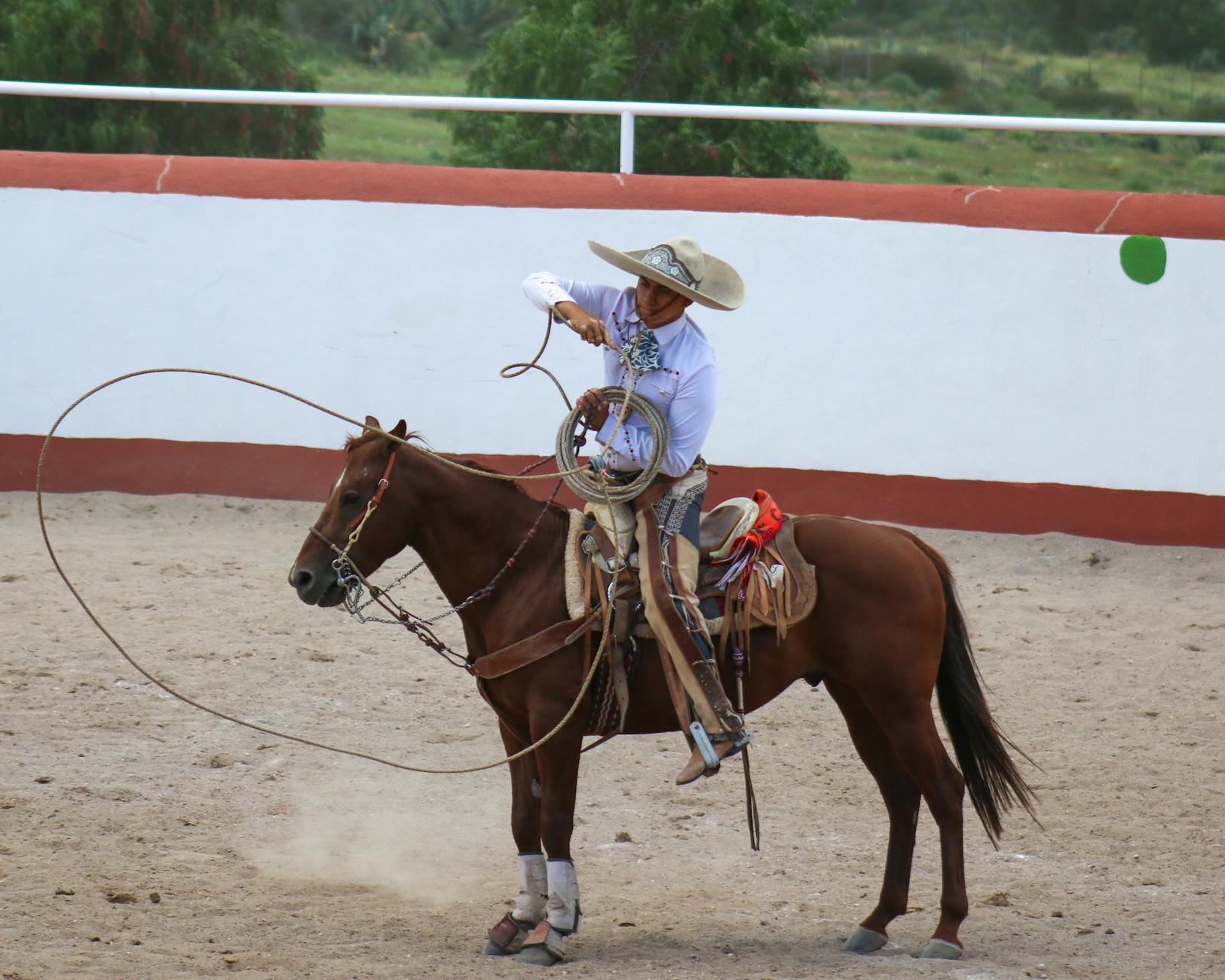
The charro tradition traces its roots to the word charro, previously used in Spain, which referred to the rider who used a garrocha to control cattle. The Spanish then brought their horses, cattle, and ranching techniques to colonial Mexico. As time passed, the unique conditions of Mexico, gave rise to a distinctive rider culture.Mexican Charros emerged as expert horsemen and ranch workers, renowned for their riding skills, distinctive attire, and code of honor.
During the viceregal era in Mexico, vast estates known as haciendas, relied on charros for cattle herding, taming wild horses, and performing other ranch duties. These horsemen developed specialized techniques and routines that eventually gave rise to organized competitions and demonstrations, laying the foundation for Mexican charrería.
Thus, the Mexican charro is characterized as a rider skilled in the handling of the lasso, the taming of horses, and raising cattle. The Mexican charro suit consists of tight pants, with silver buttons on the sides, a white shirt, bow tie, waistcoat and short jacket. The charro also wears a hat with a wide brim.

Mexican Charrería
In Mexico, at the beginning of the twentieth century, charrería became a symbol of Mexican identity and resistance. It is thought that after the revolution, the Mexican government sought to promote national unity and pride by elevating the image of the charro as an emblem of Mexico’s rural heritage and revolutionary spirit. Also, during the agrarian distribution, large landowners that had to leave their estates possibly encouraged this riding in city life such to maintain their identity.
Charrería is often considered the national sport of Mexico, embodying the history, values, and artistry of the charro. It includes a series of competitive events known as “suertes,” which test a participant’s skill in roping, riding, and handling livestock. Originating as practical ranching skills, these events gained popularity and soon became a form of public entertainment and community celebration. Such that charrería encompasses historical, economic and social dimensions.

In 1933, the Federación Mexicana de Charrería (Mexican Federation of Charrería) was founded to preserve, regulate, and promote the sport.
In 2016, charrería, as an equestrian tradition, was included in the list of the Intangible Cultural Heritage of Humanity, by UNESCO.
Traditional Mexican Charro Attire
A key feature of the Day of the Charro is the parade of stunning traditional costumes. The charro suit, or “traje de charro,” is instantly recognizable for its elegance and intricate detail. Typically, the suit consists of a short jacket and snug-fitting pants adorned with silver buttons and embroidery. A wide-brimmed sombrero, silk tie, and embroidered belt complete the outfit.
The suit is not just attire—it is a symbol of pride, craftsmanship, and the enduring legacy of the charro. Each region of Mexico adds its own flair, with variations in color, decoration, and accessories, making the traje de charro a living canvas of Mexican artistry.

History of Day of the Charro
In Mexico, the Day of the Charro is celebrated on September 14th. This recognition was established by Mexican President Abelardo L. Rodriguez in 1934. It was Mexican President Manuel Ávila Camacho, who officially designated charrería a national sport.
The Day of the Charro highlights not only the role of the charro in Mexico as a guardian of tradition and national identity, also the influence on Mexico’s road to independence.
Throughout Mexican history, charros have been revered for their horsemanship, and for their patriotism and bravery. Many charros played vital roles in the fight for Mexico’s independence and subsequent conflicts, defending their land and adopting the values of courage, loyalty, and community leadership.
Festivities and Celebrations
On September 14th, many towns and cities across Mexico celebrate the Day of the Charro. Events may include:
- Parades: Charros and escaramuzas ride through the streets in full regalia, accompanied by mariachi bands, folkloric dancers, and decorated floats.
- Charrería Competitions: Local and national teams compete in events.
- Music and Dance: Music by mariachis and local bands might fill the air, while traditional dancers in colorful costumes perform, in vibrant displays.
- Food and Gatherings: The festivities may be accompanied by traditional Mexican cuisine, varying by region.
- Religious Observances: Many communities begin the day with a Mass to bless the charros, their horses, and their work.

The Current Role of the Mexican Charro
The image of the charro seems inseparable from Mexican popular culture. Charros appear in music, film, art, and literature as symbols of heroism, romance, and resilience
Today, the charro’s influence extends beyond Mexico’s borders, inspiring rodeo traditions in the southwestern United States and becoming a touchstone for Mexican communities worldwide. In the United States, there are charro associations in several states, including Arizona, Colorado, New Mexico, Illinois, and Texas.
Preserving the Charro Legacy
Despite modernization and changing lifestyles, the tradition of the charro remains alive and well. Organizations, schools, and families across Mexico work tirelessly to keep charrería relevant for new generations. Children learn the skills of riding and roping from an early age, while artisans continue to craft the ornate saddles, boots, and clothing that are essential to the art form.
Currently, there are more than 500 charro associations in Mexico.
In 2016, UNESCO recognized charrería as an Intangible Cultural Heritage of Humanity, affirming its importance as a living tradition and a source of communal pride.
Conclusion
The Day of the Charro is more than a celebration of horsemanship—it is a living tribute to the Mexican traditional country spirit. Through competition, music, pageantry, and shared history, the charro tradition endures as a vital expression of Mexican national identity, linking the past to the present and inspiring future generations to ride boldly into the future, sombrero held high.
Author: allmexico.store
References
Mexican Government
Did you know?
Women have also made significant contributions to the charro tradition. The “escaramuza charra” is a team of women who perform synchronized equestrian routines, showcasing bravery, skill, and grace. Wearing elaborate, traditional dresses called “adelitas,” these women pay homage to female figures in Mexican history, especially the “Adelitas” of the Revolution. Today, escaramuzas are a celebrated part of the charrería.

In colloquial language in Mexico, the word charro! or charros! can also mean “surprise! or irritation; as well as attention! or beware!