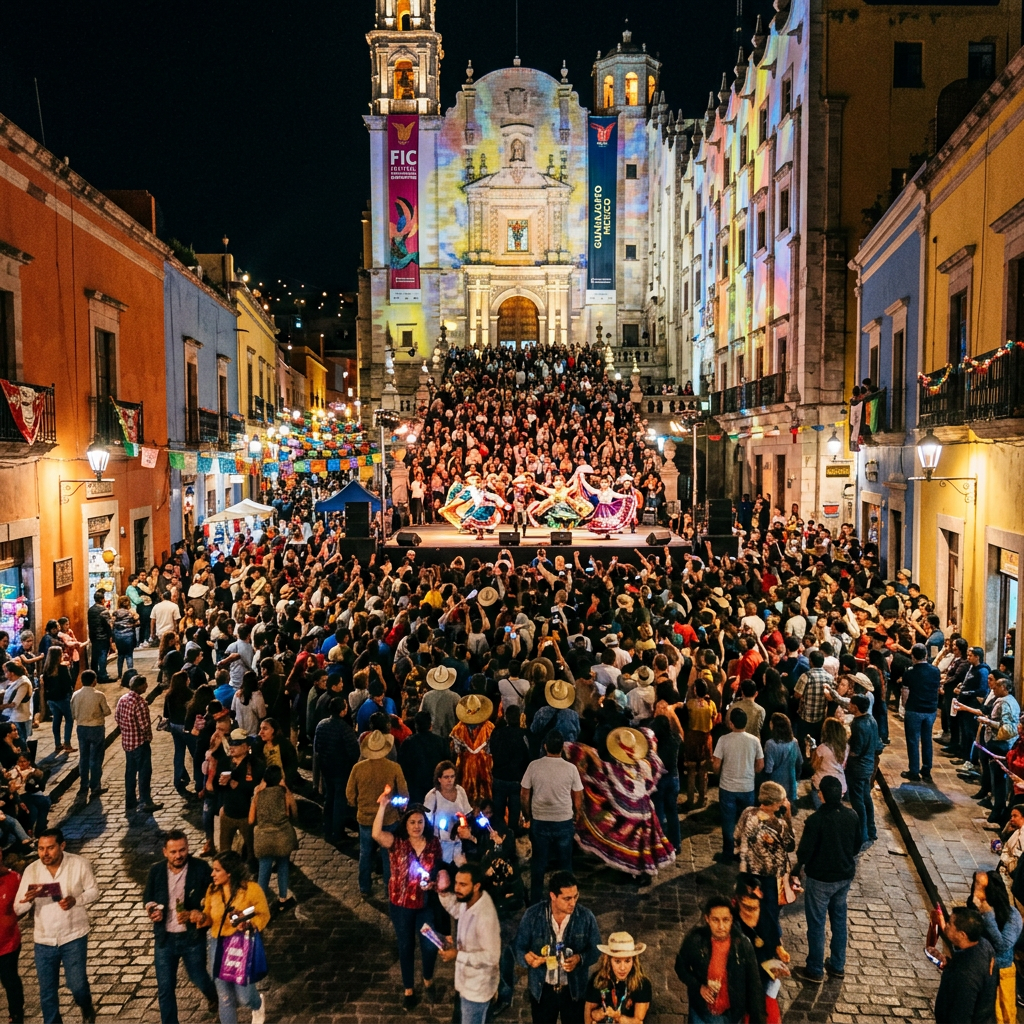
The Festival Internacional Cervantino, commonly known as Cervantino, is one of the most important international arts festivals in Mexico. Held annually in the historic city of Guanajuato, this cultural event brings together artists, musicians, dancers, actors, and audiences to celebrate artistic expression and cultural diversity.
This year, Cervantino continues a tradition that began with theatrical performances and grew into an internationally recognized arts celebration. The festival provides a unique opportunity to understand Mexico’s cultural identity while experiencing artistic traditions from around the world.
But what is the origin of Cervantino Why is it celebrated in Guanajuato? What makes this festival so significant to Mexican culture?
What is the Cervantino Festival?
The Festival Internacional Cervantino is a multidisciplinary cultural festival featuring theater, music, dance, opera, visual arts, cinema, and other artistic presentations. It takes place throughout Guanajuato, using historic theaters, museums, plazas, and public spaces as venues.
Cervantino is recognized for its international character. Mexican artists share the program with performers and cultural organizations from other countries, creating opportunities for artistic collaboration and cultural exchange.
Unlike festivals devoted to a single art form, Cervantino encompasses a broad range of creative disciplines. Its program can include classical music concerts, contemporary dance, traditional performances, experimental theater, exhibitions, and public cultural activities.
This diversity has helped establish Cervantino as an important event in Mexico’s cultural calendar.
The Origins of Cervantino
The origins of the Cervantino Festival date back to the mid-20th century, when short theatrical presentations known as entremeses began to be performed in Guanajuato.
These short presentations were inspired by the works of Miguel de Cervantes, the celebrated Spanish writer best known for his novel Don Quixote. The performances became associated with the city’s cultural life and eventually inspired a larger artistic event.
In 1972, the first official Festival Internacional Cervantino was organized, expanding the earlier theatrical tradition into an international festival.
Over the following decades, Cervantino grew in scope and reputation. Theater remained part of its identity, but music, dance, opera, visual arts, and other disciplines became central to its programming.
Today, the festival attracts performers and visitors from Mexico and abroad, reinforcing Guanajuato’s position as an important center for the performing arts.

Who Was Miguel de Cervantes?
Miguel de Cervantes Saavedra was a Spanish writer who lived from 1547 to 1616. Cervantes is widely regarded as one of the most influential authors in Spanish-language literature.

His best-known work, Don Quixote, tells the story of a man who imagines himself a knight and embarks on adventures. The novel explores imagination, idealism, reality, and the relationship between individuals and society.
Cervantes also wrote short plays and other literary works that contributed to Spanish theater.
The Cervantino Festival takes its name from this literary figure, as its early theatrical performances drew inspiration from his works. Although the festival has expanded far beyond Spanish literature, the connection remains an important part of its historical identity.
Why Is Cervantino Celebrated in Guanajuato?
The city of Guanajuato provides a distinctive setting for the festival because of its historic architecture, cultural institutions, and long artistic tradition.
During the colonial period in Mexico, Guanajuato city developed as an important mining center. The city became closely associated with Mexico’s economic and historical development. Its historic center contains churches, plazas, theaters, museums, and colorful buildings that reflect different periods of its history.
The city’s theaters and public spaces are particularly suited to cultural performances. During Cervantino, these locations become meeting points for artists, students, residents, and international visitors.
The relationship between the festival and the city is central to its identity: Guanajuato’s historic surroundings provide a setting in which Mexico’s heritage and contemporary artistic expression come together.
The Main Artistic Disciplines of Cervantino
Cervantino brings together several forms of artistic expression, allowing audiences to explore different cultural traditions.
Music
Music is one of the festival’s major components. Depending on the annual program, audiences can discover classical music, orchestral concerts, jazz, contemporary compositions, folk traditions, and music from different regions of the world.
These performances introduce audiences to different musical styles while encouraging collaboration between Mexican and international artists.
Theater
Theater has a special place in the festival’s history because the original performances were inspired by Cervantes and Spanish dramatic literature.
Contemporary editions include a wide range of theatrical forms, from traditional productions to experimental performances addressing modern social and cultural themes.
Dance
Dance performances may include classical ballet, contemporary dance, traditional Mexican dance, and international choreographic productions.
Through movement, music, and visual expression, these performances communicate stories and traditions that cross linguistic and cultural boundaries.
Opera and Performing Arts
Opera and other forms of live performance contribute to the festival’s artistic diversity. Productions vary by edition and may include established works, contemporary interpretations, and innovative collaborations.
Visual Arts and Cinema
Exhibitions, film screenings, and related cultural activities extend the festival beyond live stage performances. These disciplines offer additional ways to explore artistic ideas, historical perspectives, and cultural identities.
The precise selection of events changes each year, reflecting the festival’s evolving program.
Cervantino 2026: The 54th Edition
The 54th Festival Internacional Cervantino takes place from October 3 to 18, 2026.
The 2026 edition features France as the guest country, highlighting cultural connections between Mexico and France. The program also emphasizes participation from Mexican states and artistic communities.
France’s participation is especially significant in the context of the bicentennial of diplomatic relations between Mexico and France in 2026.
Guest-country programs are an important feature of Cervantino because they allow audiences to explore the music, theater, dance, and other artistic traditions of a particular nation. At the same time, Mexican artists and cultural institutions remain central to the festival.
The 2026 edition continues Cervantino’s broader mission of bringing different artistic perspectives together through public cultural programming.
The Cultural Importance of Cervantino in Mexico
Cervantino has significance beyond entertainment. It contributes to Mexico’s cultural life in several important ways.
International cultural exchange: The festival creates opportunities for artists from different countries to share their work, collaborate, and introduce audiences to unfamiliar artistic traditions.
Support for the arts: By presenting diverse artistic disciplines, Cervantino helps maintain public interest in theater, music, dance, and other cultural activities.

Cultural identity: The festival connects Guanajuato’s historical heritage with contemporary artistic expression and reinforces the city’s role in Mexican culture.
Access to the arts: Depending on the program, audiences can attend ticketed performances as well as selected free events in public spaces. This range of activities allows different audiences to participate.
Tourism and the local economy: The festival brings visitors to Guanajuato, supporting demand for accommodation, restaurants, transportation, and other local services.
Cervantino therefore serves as both an artistic gathering and an important cultural institution.
The Connection Between Cervantino and Mexican Heritage
Although Cervantino welcomes international artists, its location in Mexico gives the festival a distinctive cultural context.
Guanajuato’s historic streets, colonial buildings, museums, and public plazas form part of the experience. Visitors encounter Mexican history not only through formal exhibitions but also through the city’s architecture, regional cuisine, and everyday traditions.
The festival also provides a setting in which Mexican artists can present their work alongside international performers. Mexican culture is not limited to historical traditions, as it continues to develop through contemporary music, theater, dance, and visual arts.
Furthermore, Cervantino offers an opportunity to explore how the past and present interact through artistic expression, for those interested in Mexican history and culture.

Why Cervantino Continues to Matter
The Festival Internacional Cervantino has evolved from a theatrical tradition inspired by Miguel de Cervantes into a major international arts festival.
Its ability to bring together different artistic disciplines, national traditions, and generations of audiences defines its continued importance. Cervantino preserves a connection to the literary and theatrical origins of the event while embracing contemporary forms of creative expression.
For Mexico, Cervantino represents the value of cultural exchange and the importance of maintaining spaces where art can be experienced, discussed, and shared.
For Guanajuato, it reinforces the city’s reputation as a destination where history, architecture, and artistic innovation coexist.
Conclusion
In conclusion, the Cervantino Festival in Guanajuato, Mexico is more than an annual cultural event. Cervantino reflects the development of a theatrical tradition into an international celebration of artistic diversity.
From Cervantino origins in performances inspired by Miguel de Cervantes to its modern program of music, theater, dance, opera, cinema, and visual arts, Cervantino has become an important part of Mexico’s cultural landscape.
The 2026 edition, runs from October 3 to 18. With France as the guest country, the Cervantino continues this tradition of artistic exchange.
Understanding Cervantino’s origins and cultural significance offers a deeper appreciation of Guanajuato, Mexico’s artistic heritage, and the role that international festivals play in connecting people through culture.
Author: AllMexico.store
References
54 Festival Internacional Cervantino 2026 :: Secretaría de Cultura :: México

Did you know?
In 1988, Guanajuato’s historic town and adjacent mines were recognized as a UNESCO World Heritage Site.


Leave a Reply