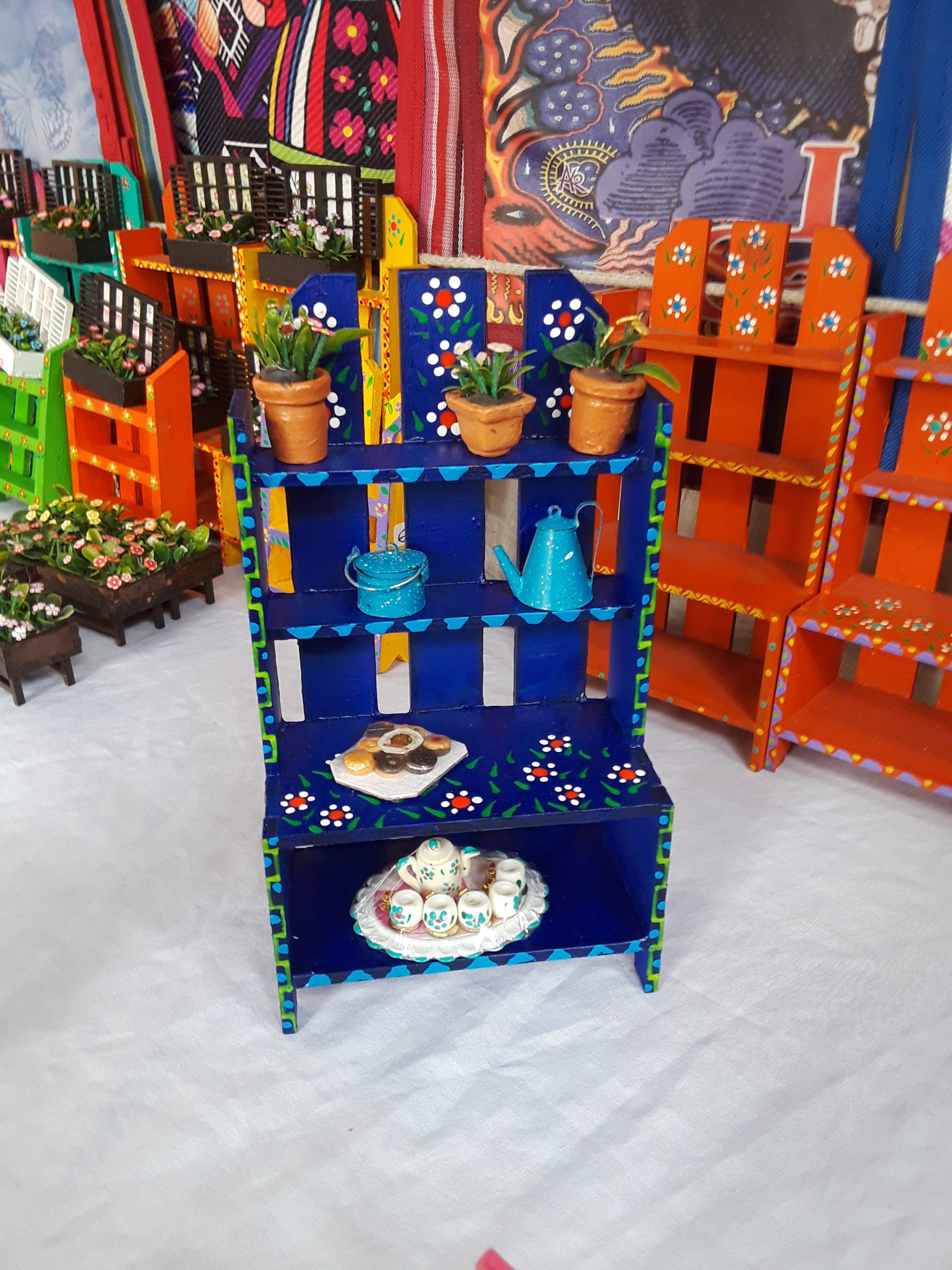
Mexican toys form part of Mexican traditions. Integrated within a colorful culture and folklore, traditional toys have been inherited by generations of children in Mexico.
The making of traditional toys continues to be a current practice in Mexico.
Check out these amazing Mexican toys and games!
Balero

The balero (cup and ball) consists of a small ball (usually made of wood) connected to an attached cup-and-handle with a string. The cup fits the ball. The player can only use the arm that holds the cup-and-handle. The object of the game is to get the ball into the cup. The player tosses the ball upward, then jerks to try and catch the ball in the cup. It is a game of trial and error.
Purchase a Balero

Canicas
Canicas (marbles) are balls of different materials such as glass, clay or metal that are thrown with precision. In Mexico, the game of marbles was brought from Spain.

photo credit Mexico Desconocido
There are countless ways to play with marbles. The launch and game modes can vary. In Mexico, one of the most famous games is the cocol or rhombus, which consists of drawing on the ground a rhombus on which the marbles that will be bet will be placed. Players take turns to take out those that are already in the cocol. The player who is not eliminated wins.
Purchase marbles
El Crisol, a glass factory located in the vicinity of Texcoco in Mexico City, was the first to produce marbles. In Tacubaya, also in Mexico City, there was another marble factory. Both factories have now disappeared.
Mexican Toy Cars and Trucks

Toy cars and trucks are made of different materials, such as wood, aluminum, metal, and plastic.
Traditional Ceramic Clay Toys from Mexico

Mexico has a wide variety of toys fired from ceramic clay. In Mesoamerican Mexico small zoomorphic and anthropomorphic figures were molded, dolls were formed. There were also rattles and whistles. In the state of Oaxaca, especially, toys made from ceramic clay continue to be sold.
The Mexican government presents a collection of a set of toys made mostly with clay.
There are bulls decorated with details of red, white, and black colors, used as piggy banks. There are also zoomorphic toys: ducks, turtles and jaguars. The set also has some anthropomorphic figures. Temas – Memórica (memoricamexico.gob.mx)
Mexican Dolls
There are a variety of dolls made in Mexico.

Mexican Corn Husk Dolls

In Mexico, corn husks are used in the making of toys and crafts. It is common to see dolls made from corn husks.
This Mexican shop has an incredible collection of dolls made from corn husks. Corn Husk Dolls – Muertolandia.com

The husks are wrapped around bunched grasses, a corncob, or bamboo. The body is formed and brightly painted with aniline dyes.
Mexican Rag Dolls
Rag dolls in Mexico are made mainly of fabric. They are made by hand, and usually their filling is of pieces of the same fabric. In almost every state of Mexico you can find a different type of rag doll, usually with regional traditional costume.

One of the most famous rag dolls in Mexico is the Otomi doll, from the state of Queretaro.
The Otomi doll is a favorite and comes in many different sizes, with a variety of dress colors. The dress carries flowers of Otomi design. The color of the skin is usually pink fabric. The eyes are large. The body transmits a tender image.
The Otomi doll has been declared cultural heritage of the state of Queretaro.
Cardboard “Lupita” dolls have existed in Mexico for more than 200 years. There are records of their early production in the cities of Celaya, Guanajuato, and Mexico City. They are made from papier-mâché and hand painted.


Mexican Lupita dolls are made from papier-mâché and hand painted.
Read more about captivating Mexican dolls.
Luchadores

Luchadores (toy wrestlers) are popular in Mexico. Wrestling in Mexico is a tradition for many families. In the 1950’s, Mario González Marquéz was the creator of toy wrestlers in Mexico. Mario González was a sculptor and wood carver. He used the technique of plaster molds for metal figures in order to make small plastic wrestlers. There were seven base wrestler figures.
The first Mexican plastic fighter was El Santo, with his classic pose of the raised hand. This position was replicated for all figures, without distinguishing the character.
Camerino Victoria Cruz and her family are among the few traditional manufacturers of plastic wrestlers. The raw material is polyethylene, usually obtained from recycled products. Most traditional toy wrestler manufacturers have their workshops in the eastern part of Mexico City.

UNBOXING Luchadores De Plástico Hechos En México – Bing video
Matraca

The matraca is a spinning ratchet made of wood, that makes noise. It is very loud. The origin of the matraca is Arabic, as it was introduced to Spain, then brought to Mexico. “Mitraqa” in Arabic means hammer, and “taraq” means to strike.
The matraca is also considered a musical instrument.
Titeres

In Mexico, titeres (marionettes and puppets) are made of wood, cardboard, and fabric.
They are manipulated by hand as a glove body type or marionettes are manipulated with the use of rods and threads that move the limbs. Traditional marionettes are made in the state of Puebla. The body and limbs are made of brightly colored cloth, and the hands, feet and head made of ceramic. Through these puppets and marionettes, all kinds of characters are represented. Generally, they depict bullfighters, clowns, devils, horses, and famous characters.
Mexican Miniatures

In Mexico, it is common to find miniatures of cookware, dishes, metates, etc.
These miniatures portray Mexican life.

Copper miniatures are made in Santa Clara del Cobre, in the state of Michoacan. Miniature pots, pans, and dishes are made from copper.
Mexican Wooden Toys

Tablita Magica
Tablita Magica (Magical Ladder)is a traditional Mexican toy loved by all generations.


Purchase Tablita Magica
Yet, there are more wooden Mexican toys.

Wooden toy truck handcrafted in Mexico.
Trompo and pirinola

Trompos are made of wood or plastic, with writings on each side.

La Pirinola (Spinning Top)
In the game of Spinning Top, the player spins it and when stops, it leaves a face with the inscription of luck.
Mexican Yo-Yo

The traditional Mexican yo-yo is a toy loved by many generations. In Mexico, the traditional yo-yo is commonly made of wood, two small wooden discs joined with a space in the middle. A thread goes inside the groove. This allows for the yo-yo to rise and fall when a person puts the thread on their fingers.
These beautiful wooden yo-yos are sold by Mexicaja.com Yoyo (mexicaja.com)
The first Yo-Yo wooden toy brand in Mexico was Sheiro. This brand made the yo-yo toy popular throughout the country. In 1962, the Plastimarx company, who manufactured plastic yo-yos promoted the use of the toy by girls.
AMYY – Todo lo que necesitas sobre YoYos (yo-yo.com.mx)
Loteria

Loteria is a Mexican board game. The object of the game is to fill an assigned cardboard card that is decorated with various images, according to the names of these images. As an index card is drawn from the card deck by a “caller”, the name of the image is proclaimed. Each player places a chip on the image displayed on the cardboard card as it corresponds to the image called out. The first player to complete filling the cardboard card yells out “Loteria”.
Loteria is a popular game at Mexican family gatherings.
Purchase Loteria Board Game

More Toys in Mexico
Tic Tac Toe

This Tic-Tac-Toe was handcrafted by Raramuri artisans in northern Mexico.
Tic Tac Toe is a game that is usually played on by two players using paper and pencil. In Mexico, the game of Tic-Tac-Toe is commonly sold in 3D form, made of wood or plastic.
Handcrafted flutes for children are also popular in Mexico.

Artisans of Mexican Toys
Terán Market in the city of Aguascalientes is where the Zabalas family sells handcrafted toys. They have sold handcrafted toys for over twenty years, brought from states such as Michoacan, Jalisco, and Guanajuato.
There are various artisans who still make dolls from various materials by hand, often updating designs. Blanca Molina designs about fifty different kinds of dolls each year, and makes about 200 that are generally sold in specialty stores. Ana Karen Allende is a doll maker in Mexico City. Popular items are male and female lucha libre wrestlers, alues, chaneques, calacas, and Mayan guardian figures.
Carolina Esparragoza heads the Miss Lupita project and holds workshops and other events in order to revive the tradition of making the dolls in Mexico City.
You can also purchase Mexican toys in Mexico City Jugueteros de la CDMX, creadores de sueños y sonrisas (mexicodesconocido.com.mx)
Author: AllMexico.store

References
Las Ficheras
Mexico Desconocido Juguetes tradicionales mexicanos ¡Balero, trompo, yoyo y muchos más! – México Desconocido (mexicodesconocido.com.mx)
Revista Ciencias Víctor Manuel Gutiérrez López El jueguete popular mexicano – Revista Ciencias (revistacienciasunam.com)https://amzn.to/3UCDbVQ